First, it is necessary to clarify what exactly constitutes a “Sha.” In the realm of metaphysics, “Sha” serves as a collective term for the various adverse phenomena that arise due to a confluence of unfavorable circumstances.
Given the broad scope of metaphysics, each specific discipline approaches the subject from its own unique perspective; furthermore, within each discipline, different schools of thought emphasize distinct facets of the practice. While various disciplines and schools share a common body of knowledge—for instance, the I Ching’s Nine Palaces Flying Stars chart, which maps the auspicious and inauspicious positions for a given year, is utilized by the majority of these disciplines—they also possess critical components that are entirely distinct from one another. Examples include Gua Ge (Trigram Structures), Ming Ge (Destiny Structures), and Feng Shui Ge (Feng Shui Structures); these differ fundamentally in their objects of analysis, theoretical underpinnings, terminology, and prescribed remedies.
While the various disciplines within metaphysics collectively categorize all manner of adverse conditions under the umbrella term “Sha”—a classification to which there is no reasonable objection—it is crucial to recognize that not all “Sha” are created equal; they originate from diverse sources. Even if the resulting phenomena appear identical, the methods required to neutralize them may differ significantly. In the following sections, I will briefly and simply discuss the origins of “Sha” within the specific context of residential Feng Shui, as well as some straightforward methods for neutralizing them.
I. The Origins of “Sha” in Residential Feng Shui
From the perspective of Feng Shui, “Sha” represents the adverse outcome of external forces exerting influence upon an internal environment. It manifests as a detrimental condition arising from a conflict or struggle between an external “guest” force and the internal “host” environment. For instance, if a major road runs directly toward the main entrance of a residence—without the presence of a gently curving, auspicious thoroughfare to serve as a mediating buffer—there is a nine-out-of-ten probability that the household will suffer utter ruin or loss of life. This constitutes a classic example of “Road Sha.” There are, of course, numerous other variations. Ultimately, all forms of Feng Shui “Sha” stem from a fundamental discord between the external environment (Wai Ju) and the internal layout (Nei Ju).
II. Techniques for Neutralizing “Sha” in Residential Feng Shui
To address the root cause of the issue, the most fundamental and effective solution for neutralizing the “Sha” energy present in a residential Feng Shui layout is to undertake a restructuring of that layout. In situations where the existing layout cannot be altered or restructured, one must then resort to alternative, supplementary methods of neutralization—what might be termed “auxiliary techniques.” These are measures undertaken as a last resort—steps one would ideally prefer to avoid, yet is compelled to execute when no other options remain. Outlined below are several such methods:
- Neutralization via Talismans and Incantations
The effective duration of this method typically spans one Jie Qi (solar term), extending at most to a single Liu Nian (calendar year). It constitutes the most rapid and potent method available for arresting the influx of “Sha” energy. The practitioner of this art is required not only to possess superior technical skill but also to cultivate their personal character to a high degree; only then will their virtue be sufficient to command the stars and spirits. In the modern era, the authentic transmission of this knowledge is a rare occurrence.
Those who truly comprehend this art—and can apply it effectively—are few and far between; indeed, it is a rare privilege for the average person to encounter such an individual. There is a story from ancient times regarding several scholars who were traveling to the capital to sit for the imperial examinations. Along the way, they stopped to seek lodging at a local household. The host was a kind and virtuous man; although his family was poor, he treated his guests with the utmost sincerity and hospitality. Captivated by the scenic beauty of the surroundings, the scholars found themselves lingering there for several days—a delay the host accepted without the slightest complaint. Upon their departure, wishing to repay the host for his kindness, one of the scholars—who was deeply versed in the principles of Feng Shui—offered to examine the layout of the host’s residence. He discovered a flaw in the structural configuration; however, due to the constraints imposed by the mountainous terrain, it was impossible to physically alter the building’s structure.
Consequently, he left the host with a set of seven talismans, instructing him to affix one talisman each year to a specific, critical location within the house, following the cyclical flow of the annual energies. Over the course of the ensuing seven years, the family prospered in every endeavor; whatever they undertook yielded bountiful results, and their household flourished. At the end of the seventh year, true to the scholar’s implicit prediction, the family moved down from the mountain. - The Five Elements Array Method of Dissipation
This method involves utilizing a specific arrangement of the Five Elements to neutralize “Sha” (negative energy), based on the inherent attributes of that energy. From both a psychological and a morphological perspective, this method serves to bolster the confidence and morale of the property owner. For instance, consider a shop with a main entrance that is unavoidably “clashed” (directly impacted) by external forces—a situation where the “Sha” energy is classified as belonging to the Metal element. In such a case, a Five Elements array designed for generation and transformation would be positioned at the entrance. Arranged from the interior of the shop outward, the sequence of elements would be: Wood, Fire, Earth, Metal, and Water. The final element in this sequence—Water—is positioned at the threshold of the door. Thus, when the incoming “Sha” energy (Metal) encounters the Water, its energy is “drained” or dissipated; this effectively weakens and neutralizes the potency of the negative energy. - Dissipation via Feng Shui Objects
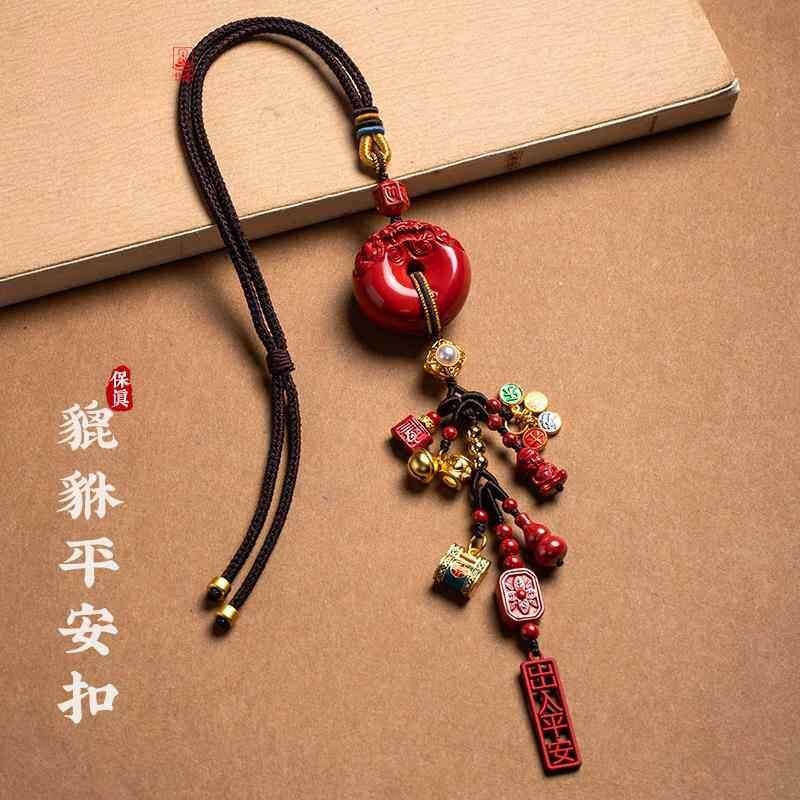
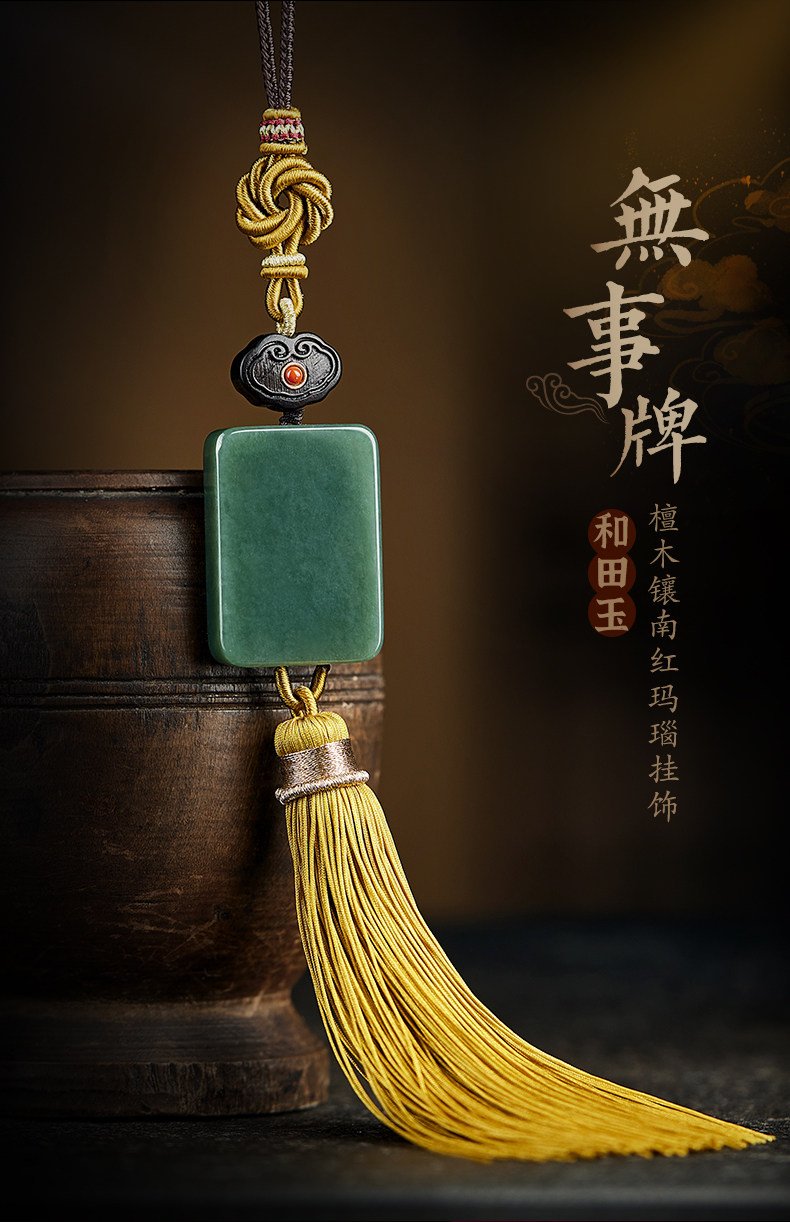
This constitutes the simplest method of all, and it is currently quite popular. The fundamental principle involves utilizing specific objects to address various spatial conditions: placing shielding objects in inauspicious areas to block negative influences; positioning absorbing objects in auspicious areas to capture and retain positive energy; and using supplementary objects in areas exhibiting structural deficiencies to restore balance—among other similar applications. For instance, if one observes an unsightly, sharp-pointed structure outside the home, one might display a Bagua mirror, a Shan Hai Tu (Mountain and Sea Map), or a Taishan stone to counteract it. Inside the home, on a suitable piece of furniture situated along the 45-degree diagonal line from the main entrance, one might place auspicious objects such as a God of Wealth, a “beckoning cat” (Maneki-neko), or a money turtle. Furthermore, in areas where the home’s layout is irregular—such as missing a corner or having an oddly positioned balcony—one might place a rug or similar item to symbolically “fill” the void and signify completeness. - Remediation through Decoration and Concealment
This category addresses issues arising from the internal architectural structure of a residence—for example, a large overhead beam pressing down on a living space, or two doors facing each other directly. This type of negative energy—referred to as Sha—possesses no inherent elemental attribute; rather, it triggers adverse psychological reactions stemming from visual perception and sensory experience. An overhead beam creates a sense of oppression, while doors facing one another generate a feeling of mutual interference. Fundamentally, these issues bear little direct relation to the core principles of Feng Shui.
Nevertheless, since these phenomena undeniably cause discomfort, labeling them as Sha is not entirely inappropriate; however, it would be equally improper to exaggerate their significance to the point of becoming overly paranoid or seeing threats everywhere. These architectural flaws can be effectively remedied through decorative concealment—adhering to the principle that “out of sight means out of mind.” One should also strive to avoid having doors face one another directly, thereby preventing mutual interference and eliminating any subtle visual or sensory discomfort that might arise.
Regarding the Feng Shui practice of “dissolving Sha“: due to the encroachment and influence of other disciplines over time, the perceived types of Sha and their corresponding remedies have proliferated; they are now diverse in nature, with varying degrees of efficacy. Regardless of which method is employed, it is absolutely crucial to select an auspicious date and time for the intervention—this is of paramount importance! It could be argued that, with the exception of talismanic incantations—which may yield immediate results—most other remedial methods possess limited inherent efficacy on their own. Consequently, their power and effectiveness must be significantly enhanced and bolstered through the precise selection of the specific date and time at which the remedial action is performed.
The act of breaking ground or arranging objects at a unique location on a specific, predetermined date and time is referred to in Feng Shui terminology as Qian Xing Shi Shen—”Dispatching the Stars and Mobilizing the Spirits.” The resulting outcomes—whether auspicious or inauspicious, beneficial or detrimental—are matters of profound and boundless mystery.