Laoshan Taiping Palace
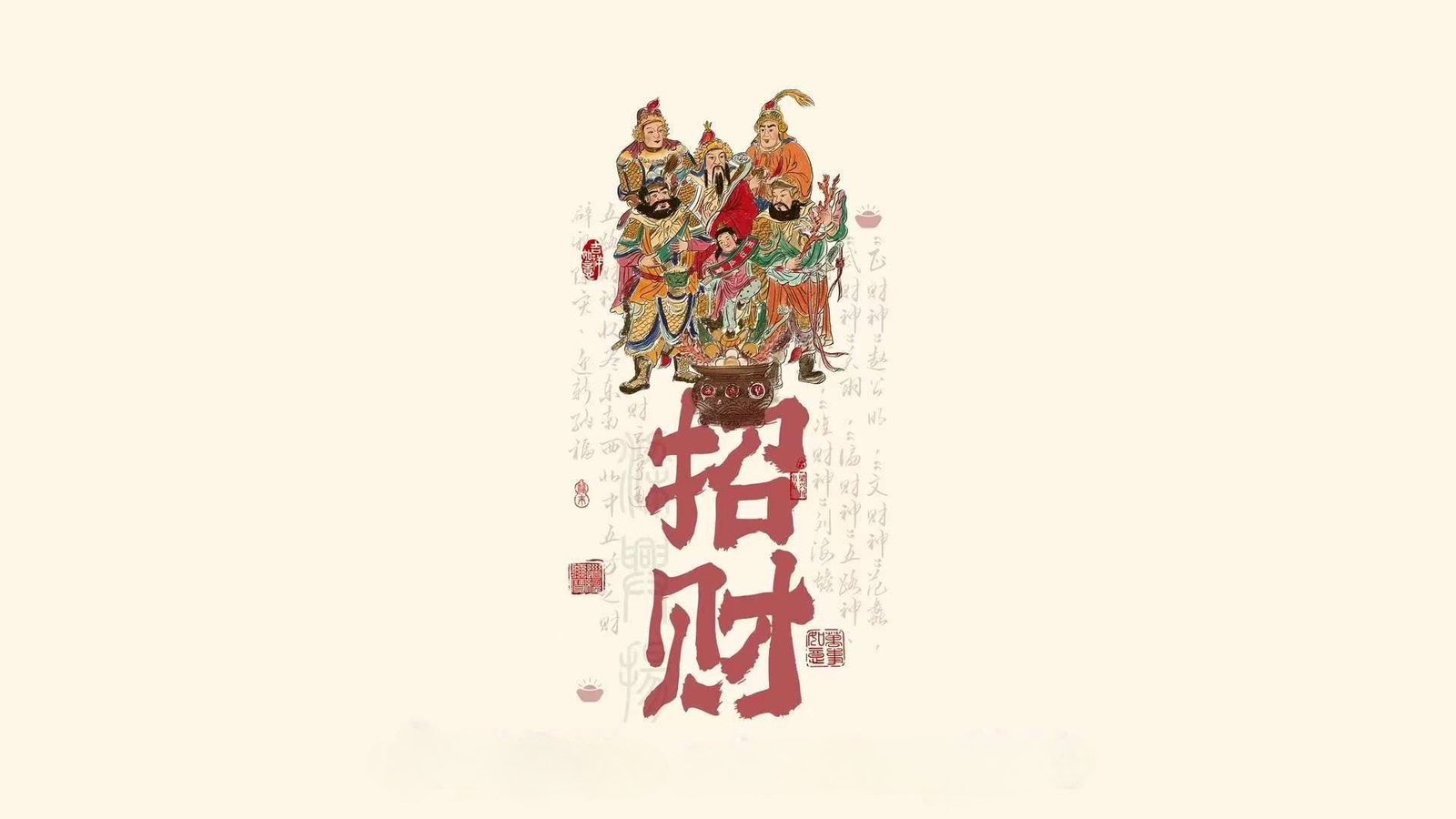
- The 15th day of the third lunar month marks the birthday of Marshal Zhao Gongming—the principal God of Wealth in the Taoist pantheon. Coinciding with this auspicious occasion, the Jade Emperor Temple is currently making preparations to conduct the ritual ceremony for “Replenishing the Wealth Treasury.”
Many devotees, having read various articles regarding the Taoist practice of opening and replenishing one’s wealth treasury, have approached our Taoist priests with a question: “If I simply participate in this replenishment ritual, will I automatically become rich?”
To offer an analogy: your wealth treasury is much like a water reservoir—it features an inlet pipe for inflow and an outlet pipe for outflow. The accumulated blessings inherited from your ancestors, along with your own virtuous deeds and merits (including your monetary income), flow in through the inlet. Conversely, all forms of consumption and financial expenditures flow out through the outlet. As long as your income exceeds your expenses, a surplus will accumulate and be stored within your treasury. However, if this reservoir is too small or has become damaged—whether through minor cracks or gaping holes—the consequences can be severe. In milder cases, wealth will gradually leak away, or the “holes” in your finances may grow larger over time; in more severe cases, you may end up with absolutely nothing to show for your efforts, or your financial woes may even begin to negatively impact your physical health.
Therefore, the adage holds true: “To possess wealth without a treasury is to labor in vain for a lifetime; to possess neither a treasury nor wealth is to toil without gain.” So, who exactly is in need of replenishing their wealth treasury? - Those who possess naturally strong financial luck and earn substantial sums, yet frequently suffer inexplicable financial losses, encounter financial setbacks, or spend money impulsively—finding themselves unable to retain any savings—are in need of this replenishment ritual!
- Those capable of earning large sums of money, yet who frequently encounter accidents, illnesses, or other misfortunes—finding themselves shuttling between hospitals and courtrooms—are experiencing a situation where “wealth brings trouble.”
- Those whose friends or relatives frequently borrow money from them, but who are often unable to recover those funds, are prone to financial leakage and loss.
- Those who are repeatedly deceived in their business or career endeavors—suffering massive financial losses or even facing bankruptcy—are in need of replenishing their treasury to revitalize their financial luck!
- Those who find themselves unable to hold onto money from month to month—experiencing a constant cycle of “wealth coming in only to go right back out”—are essentially toiling in vain.
- Those whose astrological charts indicate a “leakage of wealth” through their annual branch—meaning that despite working hard all year long, they end up with absolutely no savings or funds retained by year’s end—are prime candidates for this ritual.
This, in essence, is the intended effect of replenishing one’s wealth treasury: it serves to repair and rectify structural issues within the treasury itself. However, if your accumulated blessings and merits are too shallow—and if you fail to actively work and earn a living, possessing absolutely no economic income of your own—how could the God of Wealth possibly conjure up a sudden windfall out of thin air and bestow it upon you? In fact, across all manner of blessing rituals, we consistently emphasize this point: those who never apply themselves to study will not instantly become top scholars simply by worshipping the God of Literature; those who habitually burn the candle at both ends and abuse their bodies will not see their various ailments instantly cured merely by worshipping the King of Medicine; and those who make no effort to meet people of the opposite sex—no matter how much the deities of love and destiny, such as Cihang and Yue Lao, strive to help them find their true soulmate—will ultimately let that opportunity slip away…
This applies particularly to wealth. Within Taoist doctrine regarding the worship of the God of Wealth, there is a stance of outright rejection and disdain toward insatiable material desires and behaviors that disregard moral principles and ethical restraints; indeed, such conduct is often met with scathing satire and merciless condemnation.
Before the Hall of the God of Wealth hangs a couplet that encapsulates this Taoist wisdom: “If there are indeed a few spare coins in the purse—you want them, and he wants them—to whom, then, should they be given? If there is not a shred of benevolence in the heart—you ask for this, and he asks for that—on what grounds, then, should they be granted?”
Clearly, the first line serves as a merciless satire of those insatiable individuals who burn massive amounts of incense and kowtow incessantly before the God of Wealth, hoping to stumble upon a stroke of great luck and amass a fortune. The second line, conversely, offers a revelation from the opposite perspective: Do you wish to become wealthy and prosperous? You must first harbor benevolence in your heart; otherwise, the God of Wealth will most certainly not grant you his blessings.
Taoist scriptures also contain extensive discourse regarding the correct attitude one should adopt toward the pursuit of wealth, as well as the moral codes that must be strictly observed.
For instance, the Taoist Patriarch Laozi, in Chapter 81 of the Tao Te Ching, explicitly states: “The more one gives to others, the more one possesses; the more one gives away, the more one gains.”
Laozi posits that a person of “the Way”—one who possesses deep insight into the nature of the world—should cultivate boundless compassion and love. Such a person should strive to assist others to the fullest extent possible; for the more one gives to others, the wealthier one becomes oneself, thereby earning the protection and benevolence of the Heavenly Way. Conversely, those who know only how to hoard material goods and covet wealth—seeking only to take without ever giving—are destined to end their days as pitiable misers and individuals utterly impoverished in spirit. The Taishang Lingbao Shengxuan Neijiao Jing (Scripture of the Inner Teachings on Ascending the Mystery, Revealed by the Supreme Lingbao)—specifically the “Chapter on Harmony and Balance”—states: “Cultivating goodness brings forth blessings; committing evil invites calamity.” From the Taoist perspective, both “blessings” and “calamities” hinge entirely upon “goodness” and “evil”—that is, they depend on whether or not one adheres to moral norms and codes of conduct.
Seeking wealth and praying for blessings is, in itself, a perfectly reasonable and natural human desire. However, if one pursues these ends while disregarding Tao (the Way) and De (Virtue)—thereby deviating from the fundamental principles of being human and betraying one’s own conscience—then such actions run contrary to the laws of Heaven.
Taoism has never shied away from the subject of money and wealth; rather, it teaches that wealth should be acquired through righteous means and utilized to further one’s spiritual cultivation (Zhengdao).
As the old adage goes: “A gentleman loves wealth, but acquires it in a righteous manner.”
Furthermore, it is worth noting that before one can “replenish their Treasury of Wealth” (Bu Cai Ku), one must first repay their “Debts of Birth” (Shousheng Zhai).
Essentially, prior to undertaking any Taoist ritual intended to bestow augmentation or gain, one is generally required to settle their Debts of Birth first.
However, since the primary focus of this article is to elucidate the meaning and significance of replenishing the Treasury of Wealth, we shall not delve into the details of the Debts of Birth here.
Finally, let me add this: it is all too easy to deplete one’s accumulated blessings (Fubao), yet it is a difficult and arduous task to open and replenish one’s Treasury of Wealth.
The Taishang Yuanshi Tianzun Shuo Kai Ku Yaoshi Miao Jing (The Wondrous Scripture on the Key to Opening the Treasury, Spoken by the Celestial Worthy of Primordial Beginning) records the following:
“If any virtuous man or faithful woman, with utmost sincerity and reverence, observes a vegetarian fast, performs ritual ablutions, and offers incense, flowers, lamps, and candles; and if they invite a High-Ranking Ritual Master (Gao Gong Fa Shi) to perform the rites of purification and incense-offering, to formally enact the liturgical protocols, and to invoke the presence of the Sages and True Immortals; and if the congregation recites this scripture in unison—ten times, or perhaps a hundred times—then the gates of the Treasury in the Netherworld shall swing wide open. The living shall receive immediate blessings, while the deceased shall attain spiritual transcendence. This scripture consists of three hundred and seventy-six characters; for every single character recited, ten thousand strings of cash are credited to one’s account. Every line serves to expiate transgressions and absolve sins; every phrase serves to augment blessings and prolong life. Upon passing from this world, men shall ascend to the Realm of Immortals, while women shall be reborn in a male body.”
Thus, it is evident that to successfully replenish one’s Treasury of Wealth, one must formally invite a Taoist priest to perform the rituals in strict accordance with liturgical protocols, thereby invoking the presence of the Sages and True Immortals.
The 15th day of the third lunar month (corresponding to May 1st in the Gregorian calendar) marks the birthday of Marshal Zhao Gongming—the Taoist God of Wealth. The God of Wealth is the deity within the Taoist pantheon who presides over all sources of wealth and treasuries of fortune throughout the world. As the saying goes, “The God of Wealth enables the accumulation of riches”; therefore, paying homage to or making offerings to the God of Wealth can attract treasures and fortune, ensuring that wealth flows in an endless, rolling stream! Conducting rituals to attract wealth, receive blessings, and replenish one’s spiritual treasury during the birthday of the God of Wealth is a practice grounded in profound Taoist doctrine and teachings; it presents a magnificent opportunity to establish a spiritual resonance with the celestial realm and to invite prosperity and auspicious fortune.